
Health5 min read
Could STRESS Be Stopping Your Weight Loss?
Stress is normal, but too much for too long works against weight loss. How stress eating takes hold and the steps that break the pattern.
Lizzie Bell
You have taken a reading and you have two numbers. What systolic and diastolic actually measure, the standard ranges, and when to speak to your GP.
You’ve taken your blood pressure and you’ve got your reading….but what do those numbers mean?!
Are they good? Are they bad? And do you need to do anything with them?!
Well this is what we are going to cover today!
Put simply, blood pressure is the force exerted by circulating blood on the walls of your arteries as your heart pumps it around your body.
It is typically expressed as two numbers:
For example, a blood pressure reading of 120/80 mmHg means:
If you are taking your own blood pressure, to get an accurate reading I would advise you do it first thing in the morning whilst you are still in a rested state when you wake. I would also take it three times and take an average and always use the same arm (ideally left as closer to the heart).
Also important to note is that eating, rushing around, stress, alcohol and coffee all temporarily elevate your blood pressure and so can effect your true reading.
So why do we care about blood pressure?
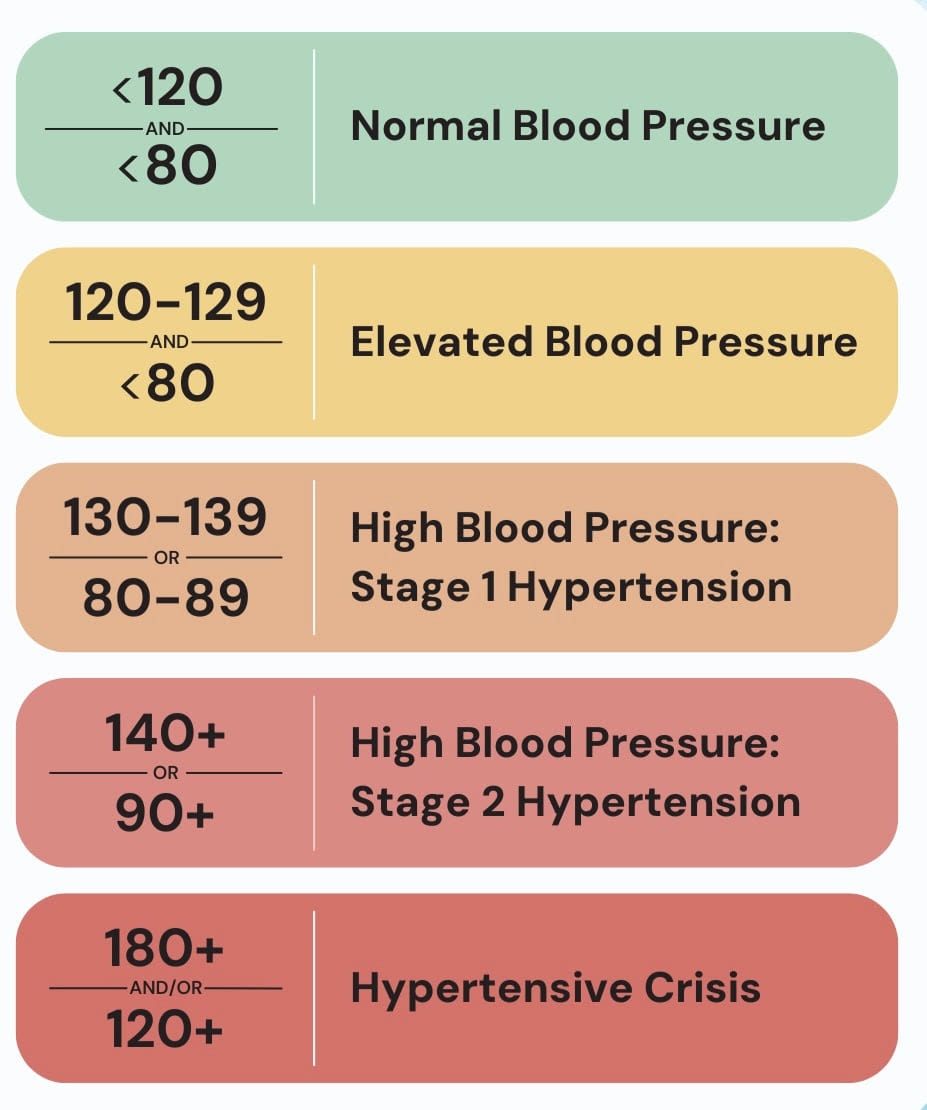
Maintaining a healthy blood pressure is important for overall cardiovascular health with the gold standard often referred to as 120/80.
If we have high blood pressure (hypertension), this can negatively impact our health including;
Low blood pressure (hypotension) is usually less of a concern but can cause dizziness and fainting.
Here is a graph so you can find out what your current reading means.
Next let’s discuss what causes high blood pressure?
As I said earlier, if you had a shot of caffeine, a shot of something alcoholic, sprinted around and then took your blood pressure it would be sky high! But that would just be a temporary reading and not a true reflection of whats actually going on!
Constantly elevated blood pressure is what we are worried about and here are some of the main causes.
(I haven’t mentioned age here as even though it typically does increase with age, that doesn’t have to happen if you are looking after your health!)
Lets focus on the two areas here that we have control over- Lifestyle & Stress!
A poor diet, lack of physical activity, excessive alcohol consumption, smoking and being overweight are all likely to drive your weight up!
Chronic stress or anxiety can also raise blood pressure for extended periods of time.
The good thing here though is if we address our lifestyle factors and start to manage our stress, we can absolutely bring out blood pressure back down to a healthier place.
So lets finish with some of the key things you can do if you are sat there realising you blood pressure is elevated!
(please have it checked with a doctor first but managing it with lifestyle factors would always be my preferred choice over long term medication if possible)
Hopefully you are a little clearer on blood pressure now and know where you currently stand!
If you’d like help working on lowering yours and improving you overall health then please drop me a message lizzie@onepercentclub.info!
Have a great week
Lizzie
Keep reading
One-to-one coaching at our private Marylebone studio. Tell us what has stopped working and we will give you an honest answer about whether we can help.
Monday to Friday, 6am–9pm
We would like to use Google Analytics cookies to see how people use this site. None are set unless you accept. Privacy policy