Hey One Percenters!
Let’s be honest. Most people start strength training because they want to change how they look.
Health might be a consideration too but looks and how we feel about our body is often the driver….and there is absolutely nothing wrong with that!
But after 15 years of coaching, the thing I hear most from clients as they start to train isn’t so much “I love how my legs look.”
It’s “I feel so much better.” Better mood, better energy, better able to handle whatever life throws at them.
So this week I want to talk about the benefits of lifting that people don’t talk about so much. There are actually loads! However, these are my five favourites, and I’ve dug out some research to back them up too.
1.Confidence & a spring in your step that lasts all day
There’s nothing quite like lifting something you couldn’t lift a month ago.
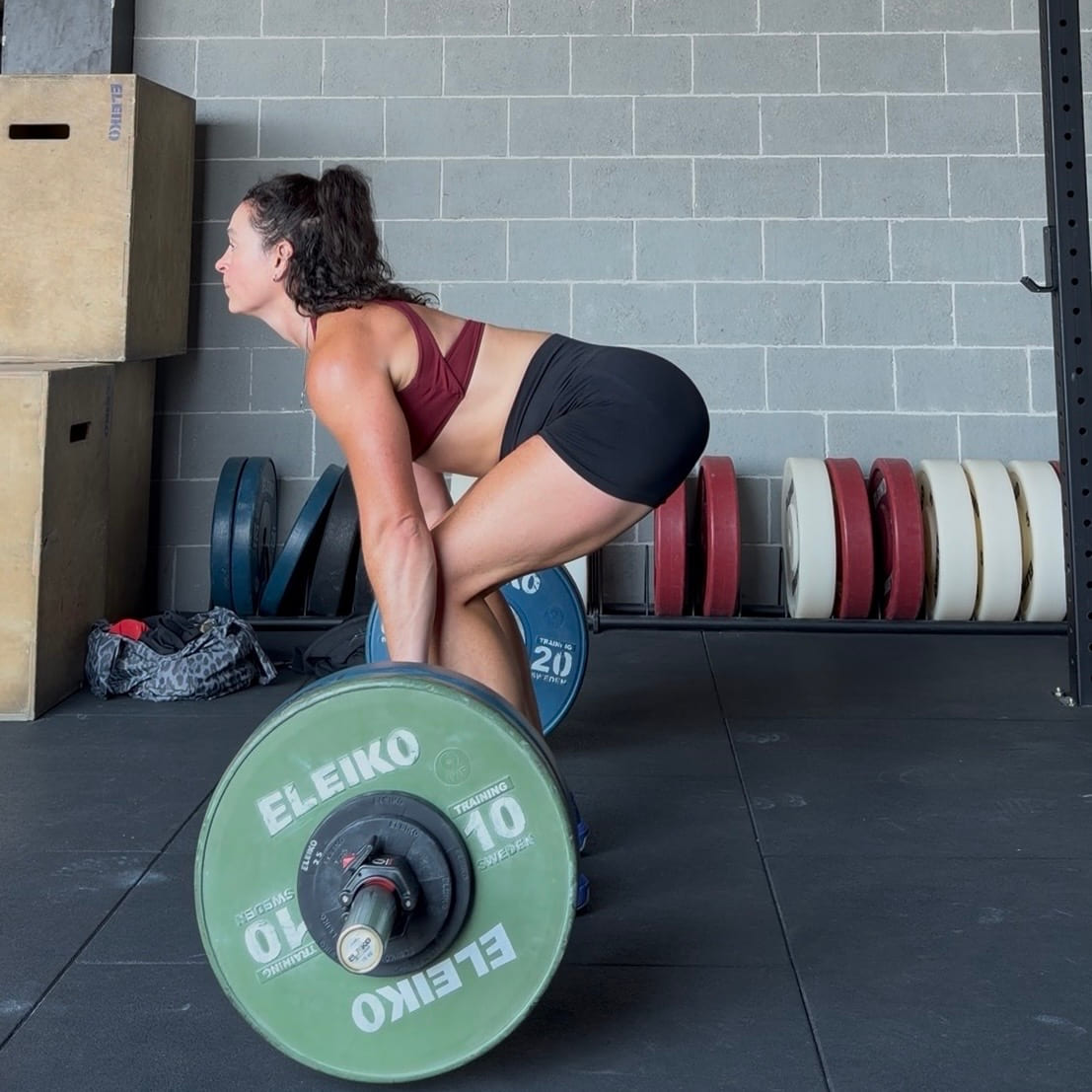
I’ve watched it happen with clients time and time again. The first unassisted pull-up, a deadlift PB, a push-up from the toes rather than the knees. Something shifts. They stand a bit taller as self confidence and belief starts to build.
That confidence doesn’t stay in the gym either. When you’ve proven to yourself that you can do hard things, you start approaching other hard things differently. A tricky conversation at work. A new challenge. A goal you’ve been putting off.
Then there’s the buzz. That post-session high where you feel energised, positive and capable for the rest of the day, ready for whatever life throws at you.
2.Less anxiety and better focus
This is a big one for a lot of my clients, especially those in high-pressure jobs, and a huge one for me!
A review of 16 trials published in Sports Medicine, found that strength training significantly reduced anxiety symptoms. This was true whether or not people had a diagnosed mental health condition. And participants weren’t doing anything extreme: they trained two to five days a week for an average of 11 weeks.
Plenty of people also find their concentration is sharper for hours after a session. If you’ve got a big day ahead and a busy head, lifting heavy things can be the best thing you can do for your brain!
3. A healthier brain as you age
We talk a lot about protecting our bodies as we age. We don’t talk nearly enough about protecting our brains.
A 2025 review of 17 trials by Jun Wu and Chuanfu Huang, looked at strength training in adults over 60. It found improvements in overall cognitive function, working memory, and verbal memory (things like remembering names and conversations).
The research is still growing but it definitely indicates you’re training your mind as well as your muscles.
4.A buffer for when life throws you a curveball
Illness, injury, surgery, a stay in hospital. None of us plan for these, but at some point most of us will face one.
This is where muscle really earns its keep. One study of hospital patients over 70, led by Jantine Van Ancum and colleagues in Amsterdam, found that those with more muscle when they were admitted had a higher survival rate. Stronger patients were also more likely to be living independently three months later.
When your body is under stress, it draws on its reserves. The more muscle you’ve built, the more you have to draw on.
Think of it as money in the bank for your body. You hope you never need it, but you’ll be so glad it’s there if you do.
Mentally, training can also give you that belief that you can overcome any challenge that comes your way even if it’s a tough one.
5.You’ll live longer
Strength is one of the best predictors of how long you’ll live.
A huge study led by Dr Darryl Leong at McMaster University, followed nearly 140,000 adults across 17 countries. For every 5kg drop in grip strength, the risk of death from any cause rose by 16%. Grip strength was even a better predictor of death than blood pressure!
It turns out that grip strength is a great marker of how strong you are overall.
You don’t need hours in the gym to benefit. Just 30–60 minutes of strength training a week was linked to a 10–20% lower risk of death. That’s one or two sessions.
So hopefully you can see that strength isn’t just about how your body looks. It’s about how you feel, how you think, your ability to handle life and how well you live for years to come.
Even more reason to keep showing up and pushing yourself in the gym!
Have a great week,
Lizzie x
References
- Leong et al. (2015). Prognostic value of grip strength: findings from the PURE study. The Lancet.
- Momma et al. (2022). Muscle-strengthening activities are associated with lower risk and mortality in major non-communicable diseases. British Journal of Sports Medicine.
- Gordon et al. (2017). The effects of resistance exercise training on anxiety: a meta-analysis of randomised controlled trials. Sports Medicine.
- Wu & Huang (2025). The effects of resistance exercise on cognitive function in older adults. Frontiers in Psychiatry.
- Van Ancum et al. (2017). Muscle measures and nutritional status at hospital admission predict survival and independent living of older patients: the EMPOWER study. Journal of Frailty & Aging.